Backup power
Solar Battery Storage & Backup Power in Kelowna, BC
Keep your fridge, furnace fan, well pump and internet running when the power goes out, on power your own panels made.
Battery Backup for Kelowna Homes and Businesses
Most people don’t realise this until the first outage: a normal grid-tied solar system switches off when the grid goes down. It has to, so that it never sends power onto a line that crews are working on. Your panels sit in full sun while the house is dark.
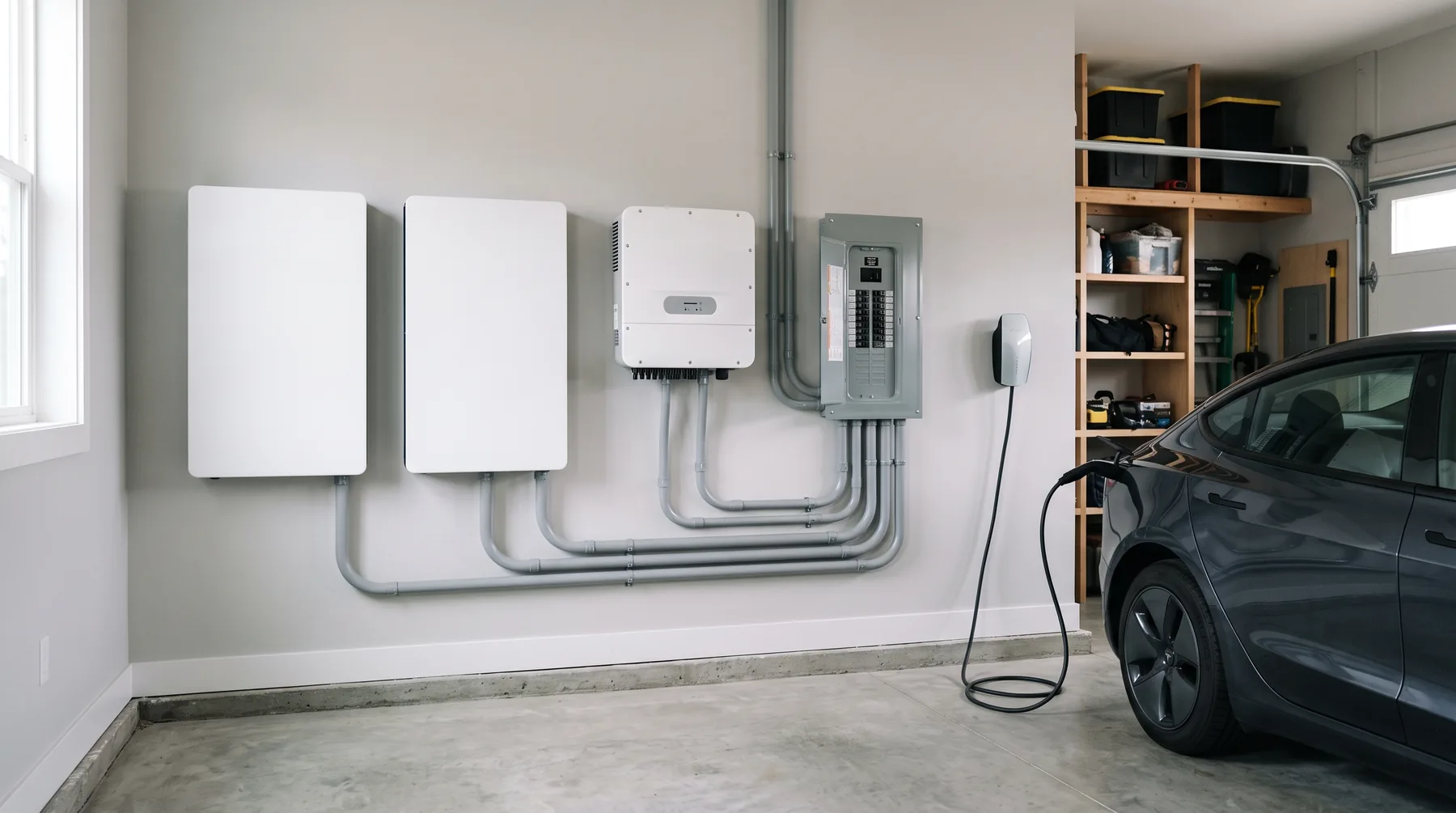
Add a battery and the right inverter and the system can separate from the grid and keep your chosen circuits running on stored solar power.
In the Okanagan that matters more every year. Wildfire seasons have brought evacuations and precautionary shutoffs, summer windstorms bring down lines, and properties at the end of long rural lines in Joe Rich, Ellison or the Naramata benches are often the last to be reconnected.
BC Hydro customers can claim up to $1,500 toward a battery installed with solar, or up to $5,000 if they also enrol in Peak Saver. Since July 1, 2026 BC Hydro pays only 10¢/kWh for solar power you send to the grid, so storing midday power to use in the evening is worth a little more than it used to be. FortisBC does not currently offer a battery rebate.
Call 250-250-2525 and tell us what you have now. We add batteries to new systems and to existing ones, including systems we did not install.

What Battery Storage Includes
Backup load planning
Backing up the whole house is costly and rarely needed. We pick the circuits that must stay on (furnace fan, fridge, freezer, well pump, internet, some lights, medical equipment) and size the battery for those.
Capacity and chemistry
Sized for how long you want to ride through an outage. You see the price of one night of essentials next to two or three days.
Hybrid or AC-coupled
New systems usually use a hybrid inverter. With existing solar we normally AC-couple the battery, so working equipment stays in place.
Automatic islanding
The system disconnects from the grid and keeps your backup circuits running with nothing for you to do, in a utility-approved setup.
Rebate paperwork
For BC Hydro customers we handle the battery rebate and explain what Peak Saver enrolment means before you sign up.
Monitoring
Charge level, solar in and household load out, visible on your phone.
Battery Storage Costs
| System | Suits | Installed cost |
|---|---|---|
| Essential circuits | Furnace fan, fridge, well pump, lights, internet | $12,000 – $17,000 |
| Whole-home backup | Full panel backed up, larger capacity | $18,000 – $24,000 |
| Battery added to existing solar | AC-coupled retrofit | $12,000 – $22,000 |
Prices are before any BC Hydro battery rebate. Capacity and how much of the panel you back up decide where you land in these ranges. Financing available.
An honest note on payback. In BC, batteries rarely pay for themselves through energy savings alone, because power is still relatively cheap. People buy them for resilience: staying warm, keeping a well pump and freezer running, and working from home through a long outage. That is a good reason to buy one, and we won’t pretend it is an investment.
Why People Choose Us for Batteries
Load first, battery second
Getting the circuit list right keeps the price down. Most homes need less capacity than they think.
Straight talk on payback
In BC a battery is a resilience purchase, and we tell you so.
Retrofits welcome
We add storage to existing arrays, including ones other companies installed.
Rebate help
For BC Hydro customers, we make sure the paperwork and Peak Saver steps are done correctly.
Find out what solar would do to your power bill.
A free estimate starts with a short phone call. No pressure and no obligation, and you get a straight answer either way.
How a Battery Project Runs
- 1
Outage conversation
What has to stay on, and for how long.
- 2
Electrical review
Your panel, any existing solar, and how the system will island.
- 3
Options priced
Essential circuits vs whole-home, one night vs several days.
- 4
Install and outage test
We cut the grid on purpose so you can see the backup take over.
Areas We Serve
Solar Battery Storage & Backup Power throughout Kelowna, West Kelowna, Lake Country and the wider Central Okanagan.
Our Other Services
- Residential Solar Panel InstallationGrid-tied rooftop solar for Kelowna houses, sized to your twelve-month usage. From $10,000 installed.
- Commercial & Agricultural SolarRoof and ground-mount systems for businesses, wineries and orchards, with demand-charge modelling.
- Off-Grid Solar SystemsComplete stand-alone power with a battery bank and generator backup, sized for December rather than July.
- Solar Panel Repair, Cleaning & MaintenanceOutput diagnosis, inverter replacement, cleaning and inspections, including on systems we didn’t install.